Welcome to the Nanophotonics Lab at the Indian Institute of Technology Hyderabad. Our research is at the intersection of photonics, semiconductor devices, and nanotechnology, with a focus on developing technologies for Optoelectronic Integration — bringing together optical components such as lasers, modulators, and photodetectors with high-speed electronic circuits. Our current work centres on Photonic Integrated Circuits (PICs), targeting applications in high-speed optical communications and Quantum Key Distribution (QKD). We are also active in Silicon Photonics and nanophotonic device characterization.
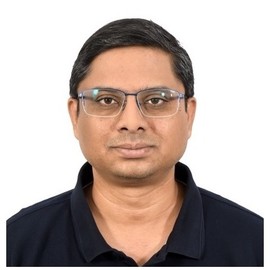
The Principal Investigator, Dr. Naresh Kumar Emani, is a faculty member of the Department of Electrical Engineering at IIT Hyderabad. For more details, please see his current CV.
A note for prospective students I enjoy working with motivated students who are genuinely interested in our research. If you are looking for JRF, PhD, or Master’s thesis positions at IITH, please feel free to get in touch. Due to the nature of our work, I am unable to offer short-term, summer, or SURE internships, and I regret that I may not always be able to respond to such requests over email. I make an exception for students who have performed well in my NPTEL courses. Please see the Prospective Students section for more details.
PhD in Electrical Engineering
Purdue University
MTech in EE (Microelectronics)
Indian Institute of Technology Bombay
BSc(Hons) and MSc in Physics
Sri Sathya Sai Institute of Higher Learning
Associate Professor (Sep 2022 – present)
Indian Institute of Technology Hyderabad
Assistant Professor (Jun 2017 – Sep 2022)
Indian Institute of Technology Hyderabad
Scientist (Dec 2014 – Jun 2017)
Data Storage Institute, A*STAR, Singapore
Engineer (Aug 2007 – Aug 2009)
Taiwan Semiconductor Manufacturing Company, Taiwan
Current research directions in our group
Our research interest lies at the intersection of photonics, semiconductor devices, material science and nanotechnology. We are interested in applying developments in these disciplines to advance the frontiers of Nanophotonics and its applications. In the initial years, we studied Mie resonances in semiconductor nanostructures with gain and loss, and electrical excitation of plasmons in MIM tunnel junctions. Over time the research focus evolved towards development of electronic and photonic integrated circuits (EPICs).
We are currently working on technologies for Optoelectronic Integration, where optical components like Lasers, Modulators and Detectors can be closely integrated with electronic ICs. We recently completed a tape-out of a InP Photonic Integrated Circuits (PICs) with an external foundry. Key research areas are design of narrow linewidth lasers, high-speed modulators and detectors to enable transmitting and receiving data at multi-GHz speeds.
Figure: [Top] Optical images of the InP chip consisting of Lasers, Modulators and Detectors designed in our lab. [Bottom] Optical characterization data showing the LIV characteristics of Laser, Optical spectrum and response of a EAM modulator.
A foundational course covering the physics of semiconductor junctions, field-effect transistors, and bipolar devices — suitable for students of electrical engineering and physics.
24,527 enrolled · 3,464 registered for exam · 1,760 learners certified
Explores light–matter interaction at the nanoscale, photonic devices, and the principles of quantum optics — bridging classical and quantum perspectives on photonics.
3,779 enrolled · 298 registered for exam · 148 learners certified
Both courses are re-run annually on the NPTEL/Swayam platform. To enroll in an upcoming session, search on the NPTEL e-learning portal.
At IIT Hyderabad, I currently offer High Speed Interconnects and Semiconductor Optoelectronics as postgraduate courses. In the past I have also taught Introduction to Nanophotonics, Introduction to VLSI Design, VLSI Technology and Microfabrication, and Device Simulation Laboratory at the postgraduate level, and Semiconductor Fundamentals, Electronic Devices and Circuits, Physics of MOS Transistors, and Engineering Electromagnetics at the undergraduate level.
Meet the team working in our lab
| Name | Current Affiliation |
|---|---|
| Madhurima V MTech, 2017 – 2019 |
Qualcomm |
| Gaurav Yadav MTech, 2018 – 2020 |
TSMC |
| Sandeep G MTech, 2019 – 2022 |
Intel |
| Sahaan P MTech, 2020 – 2022 |
TSMC |
| Naresh U MTech, 2020 – 2022 |
Qualcomm |
| Sabanaaz MTech, 2020 – 2022 |
Qualcomm |
| Shivani Bhat MTech, 2020 – 2022 |
MediaTek |
| Sourabh Chouhan MS, 2020 – 2023 |
ChipSolve Technologies |
| Sourav Das MTech, 2022 – 2024 |
Qualcomm |
| Pavan Kumar Ramuni MTech, 2023 – 2025 |
Micron |
| Samant Sharma MTech, 2023 – 2025 |
Qualcomm |
| Likhita Priya Reddy MTech, 2023 – 2025 |
Texas Instruments |
| Pritam Xaxa MTech, 2023 – 2025 |
SanDisk |
| Nikhil Lingam MTech, 2023 – 2026 |
Qualcomm |
| Dikshant Jindal MTech, 2024 – 2026 |
Analog Devices |
| Vikas Chandrakar MTech, 2024 – 2026 |
Texas Instruments |
List of major publications
Full text of manuscripts below can be shared upon request.
AE Islam, Emani Naresh Kumar, H Das, S Purawat, V Maheta, H Aono, E Murakami, S Mahapatra, and MA Alam. Theory and practice of on-the-fly and ultra-fast V_T measurements for NBTI degradation: Challenges and opportunities. In IEEE IEDM Tech. Dig, pages 805-808 (2007). [ pdf ] Conference paper
Souvik Mahapatra, Vrajesh Maheta, Shweta Deora, Emani Naresh Kumar, Shweta Purawat, Chris Olsen, Khaled Ahmed, Ahmed Islam, and MA Alam. Material dependence of negative bias temperature instability (NBTI) stress and recovery in SiON p-MOSFETs. ECS Transactions, 19(2):243–263, 2009. Conference paper
Jiaw-Ren Shih, Neeraj Kumar Jha, Rakesh Ranjan, and Naresh Kumar Emani. Methodology for bias temperature instability test. US Patent 7,759,962, July 20, 2010. Granted US Patent
We are always on the lookout for motivated students and researchers interested in joining our group for PhD, JRF, Postdoctoral, or project/thesis work. If you think you are a good fit, please consider the following before reaching out:
Letters of recommendation are an integral part of an academic career. I will be happy to write letters of recommendation if you meet the following criteria:
Communicating science is an essential part of a scientific career. Everyone is busy in their lives and would not pay attention to your work unless you make an effort to communicate it clearly. Here are some resources to get you started.